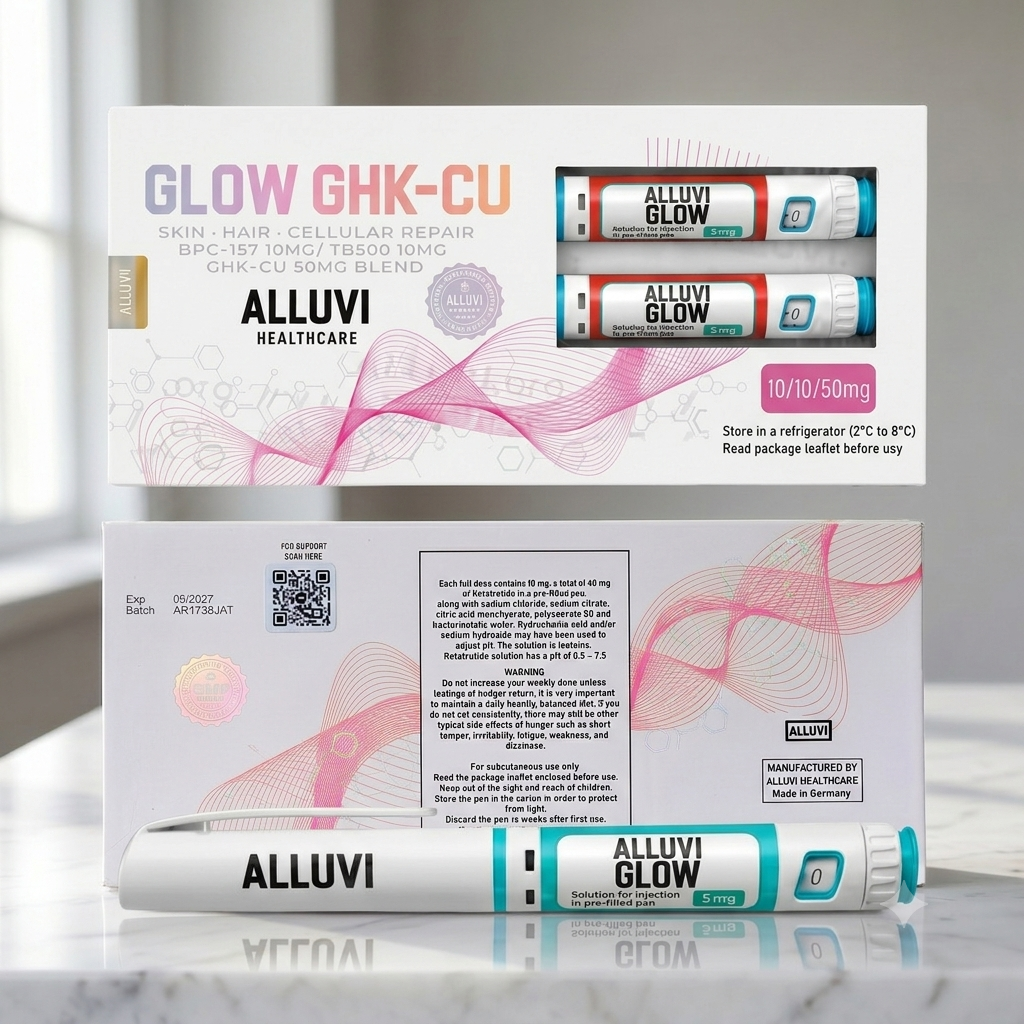
Glow - GHK-Cu & BPC-157 & TB-500 (R&D Only)
Glow - GHK-Cu & BPC-157 & TB-500 (R&D Only)
Couldn't load pickup availability
Glow GHK-Cu – BPC-157 & TB-500
A specialized trifecta formulation supplied in a pre-filled research device, provided exclusively for controlled laboratory R&D applications. Delivered in a sealed format to support compound synergy analysis, stability studies, and dual-mechanism peptide evaluation.
Produced for laboratory research only. Not for human or veterinary consumption.
Each Glow Research kit includes:
-
Pre-filled Research pen (Total blend concentration specified per unit)
-
Research information sheet
Storage: Store refrigerated (2–8°C). Do not freeze. Supplied in fixed-volume sealed format for laboratory analysis.
Delivery: Dispatched with a cold pack. Tracked 2 DAY UK Delivery. Research & Development purposes only
Science & Mechanism: What is this blend?
In a laboratory environment, this specific combination is highly regarded because it merges a copper peptide (GHK-Cu) with two systemic repair peptides (BPC-157 and TB-500). This creates a multi-pathway approach to tissue regeneration, cellular repair, and collagen synthesis.
Here is how each component behaves in a research setting:
1. GHK-Cu (Copper Peptide)
-
The "Glow" Factor: GHK-Cu is widely studied for its ability to modulate remodeling in the extracellular matrix. It upregulates collagen, elastin, and glycosaminoglycans.
-
Antioxidant Properties: In vitro studies show it acts as a potent anti-inflammatory agent by lowering pro-inflammatory cytokines and neutralizing free radicals.
2. BPC-157 (Body Protection Compound)
-
Angiogenesis: BPC-157 promotes the formation of new blood vessels, which accelerates the delivery of nutrients to damaged or recovering tissues.
-
Soft Tissue Repair: It has been shown to upregulate growth hormone receptors, speeding up the fibroblasts responsible for healing tendons, ligaments, and skin.
3. TB-500 (Thymosin Beta-4 Derivative)
-
Cell Migration: TB-500 is integral to actin regulation. In assays, it allows repair cells to migrate quickly to the site of cellular damage.
-
Synergy with BPC-157: While BPC-157 acts like a structural architect organizing the cellular framework, TB-500 acts as the transport system, pulling the necessary components to the area.
Why this combination is valuable for R&D
When these three compounds are blended, researchers can observe a compounding effect. GHK-Cu handles the superficial and structural integrity of the extracellular matrix (the skin/tissue surface layer), while BPC-157 and TB-500 work on deeper cellular signaling and vascular repair. This makes it an incredibly robust formulation for studies centered on accelerated wound healing, anti-aging cellular pathways, and tissue recovery.
Share